Search This Blog

Tuesday, May 8, 2012

Anthrobioblame - a New Kind of Science

(May 9th - Seems the links to the articles below have been removed or broken!

Now one has reappeared here.)

I see a lot of stories like this one at Ars Technica these days: "LA Smog More Cows that Cars?"

The premise is that somehow local dairy farms are contributing to the LA smog problems through ammonia emissions - at almost the same levels are pollution from autos.

Another examples is this "Belching Dinosaurs May Have Helped Keep Their World a Hot One."

Here the idea is that the dinosaurs, belching after eating, produced so much "greenhouse gas" that they influenced their environment to make it warmer.  Cows also play a role in this article: The US dairy industry contributes, supposedly, twenty percent (20%) of all methane emitted in the US.

These types of articles are pretty common.

But I think that they raise some very troubling questions: not about pollution or greenhouse gases but about the educational system that generated their authors.

So let's look at the belching article.  The point of the paper is that, after calculating the amount of methane the dinosaurs might belch "these numbers suggest that the dinosaurs were pouring out enough methane to help the greenhouse effect keep the Earth nice and toasty."

First off, why aren't the dinosaurs part of their environment - part of earth - part of everything?

There appears to be this strange notion today of anthopomorphizing one segment of a very large, open, complex biologic system and assigning it importance based on some current quasi-scientific trend humans are experiencing.

In this case we take the entire plant - select a single type of creature - and go through "scientific" effort to show how it - even though its a fully integrated, naturally occurring element in its environment - is doing something to that environment that we humans today think is bad - in this gas belching methane at a large scale.  Never mind their may have been a lot of other activities and creatures and environmental issues occurring at the time (for example, a different atmospheric composition).

Secondly, let's look at the LA smog issue.  I've spent time in large cities across the country.  Most are dirty and the culprit is auto and industrial exhaust.

How do I know this?

Very simple: the wind.  On a clear day, after a front moves through these places, winds pick up and clear out the pollution.  They don't blow the pollution into Manhattan, they blow it out.  They don't blow it into the LA basin, they blow it out.  No wind equals greater smog.  High wind means less.

LA is not normally clear - and it doesn't get smoggy when the wind blows in the ammonia from nearby dairy farms.

For an airliner you can see this pollution - see the wind blowing off to another place.

And here again we have the hapless herbivore taking the "blame" for the pollution.  The cow is a natural creature eating a natural (or mostly natural diet) using his four-part ruminant to digest plant matter via a natural methane-producing process.

No, these articles are examples of what I call "anthrobioblame."

Anthrobioblame is a term that describes how the poorly educated cannot distinguish natural processes from those they've been taught to anthropomorphize as the result of "evil human activity."

Now certainly there are plenty of situations where one can blame human for pollution - say some guy burning a pile of old tires on the back forty.  But blaming the cows for methane "pollution" is really quite silly.

Cows are descendants of natural herbivores domesticated by man.  Man, and particularly primitive man, is also a natural part of the environment - unless of course you think he was placed their by divine intervention - but that too may be a natural occurrence.

In any case herbivores doing what their intestines and gut bacteria naturally do - convert plant matter into energy and waste - are simply that: natural.

Certainly with no evil humans about these dinosaurs were not polluting their environment.

How could they?  There were part of that environment.

I think that the creation of anthrobioblame is a product of a misguided educational system.  One where man's self-centered, ego-driven thoughts on things are the pivot point around which the entire universe merrily rotates.

When the kiddies enter "university" (as opposed to "a university" or "the university" - though I don't know why articles are not longer required when talking about higher eduction institutions except perhaps to illustrate the associated idiocy about which I am writing) they are taught that man is not part of the environment and that his evil greed is the foregone reason that environment will be destroyed.

This of course at the same institutions where evolution teaches that man evolved from apes in a completely natural way... So if we evolved from apes are we also part of the same natural environment of the planet?  Apparently not.  The only difference being we have a large more efficient brain than apes.  So intelligence I guess, by simple reasoning, makes us evil.

Of course how could this natural intelligence be evil?  Especially if it evolved naturally from other natural sources?

Gee  - I thought the whole point of science and education was self, internal and logical consistency...

So basically everyone at "university" feels guilty for having a cushy government job and/or rich parents (or spend-thrift government) spending tens of thousands of dollars a year on education.

If you feel guilty there must be a reason and "university" has codified this as "evil humanity."

The justification for this is to go around collecting up examples of everything bad man has done and parade it in front of the kiddies so that their guilt has a source.

After a few decades of this those who have been indoctrinated  over a long enough period of time realize that man himself is not just inherently evil but the things man sees in the world are evil as well regardless of the perpetrator - even if its some random animal.

Now this step to me is interesting.  Its as if the evil of man - say in polluting the air - is not enough.  Almost as if on the one hand its good to see these nasty dinosaurs or cows doing bad things to the planet just like us.  On the other hand its the project of self-guilt into things which are completely natural and over which we have absolutely no control - dinosaurs from millions of years ago as an example.

Regardless of the causes I think anthrobioblame is here to stay.

After all, every university graduate already knows man is evil.

But this cannot explain things like methane in the Jurassic atmosphere so we conjure up some anthrobioblame to show that the evil of methane is A) an exceptional item (somehow) in a large, complex biosphere about which we know virtually nothing and B) somehow the consequence of evil human activity and the guilt associated with it.

So there in a nutshell is what a trillion dollars of US educational money buys (actually its probably quite a bit more because the European Union is also involved in this) - so maybe two trillion USD of education:  dinosaurs polluting the earth by belching and farting.

Anthrobioblame - Selecting and measuring, without a rational or comparative context, one naturally occurring component of a large, complex, poorly understood biosphere or biological system for the express purpose of justifying or validating a current scientific fancy, e.g., global climate change.  Ideally the selected component mirrors or parallels one which evil mankind is thought to be abusing or damaging.

Monday, May 7, 2012

Facking, the EPA, Common Sense and your Wallet

Now let's imagine a world where the problems I described with medical science penetrate into other parts of the government.

We have two interesting stories:

First we we the EPA and its further, extended fracking regulations.

Several ago I wrote about these regulations in"Facking, the EPA and the Emperor's New Clothes."

But these regulations are not enough, apparently, to prevent the heinous crime of pouring diesel fuel into a gas well as part of the fracking process.

So to save us from this practice new "guidance" from the EPA was recently released.

A review of this "guidance" indicates a great series of horrific outcomes of diesel fuel mostly related to the compounds some manufacturers - regulated by the EPA of course - put into their diesel products. 

There is a tremendous and lengthy discussion about permitting, dangers, etc.

Toward the end of the document the "pathways" that diesel fuel might follow to contamination are outlined.

While this is all well and good and no doubt will cost the industry millions if not tens of millions of dollars and jobs there's just one small problem:  diesel fuel (as the EPA describes on page #8) is made up of "20 to 60 percent polynuclear aromatic hydrocarbons (PAHs).

These compounds are, of course, components of crude oil.

Now, interestingly enough, at the bottom of shale gas wells there can be crude oil and petroleum products.  In fact, natural gas is often mixed into crude oil.

And diesel fuel is, surprise, made from crude oil - primarily by heating it with steam and then as the heated compounds rise in a large distillation column siphoning off the diesel fuel at a certain level.

So petroleum comes up through the gas well as petroleum, it gets turned into diesel fuel - a petroleum product, and now it must be regulated to put back into the well.

Now, needless to say this is complete nonsense.

No doubt there is someone on the drilling platform running a diesel generator or perhaps driving a diesel truck to the drilling site.  Or for that matter driving a diesel truck past a school where small children are playing...

All perfectly legal and unregulated uses of diesel fuel (unregulated at least at the level of the end user).

Yet using diesel fuel in a well that produces petroleum is now a regulated area under the purview of the EPA...

Our second bizarre fracking story is this: "The Microbial Complications of Fracking."

We are killing the subsurface bacterial colonies a mile below the surface of the earth.

As it turns out bacteria exist in natural gas wells - and according to this article cause problems when fracking wells - so certain chemicals are put into the well to kill off the bacteria.

Apparently (at least the implication is) we should all be concerned for the lives of these bacteria.

Now the article implies that bacteria are involved in process of creating natural gas - kind of like the abiogenic theories of petroleum (the idea that petroleum is the byproduct of a bacterial process rather than geological time and pressure).

Pretty far out stuff...

The real truth in both of these stories is that the EPA and the scientist in the second article think fracking is bad and it should be stopped.

In the case of the EPA they have little leverage save for the Clean Water Act.  So they invent a process whereby the chemicals of well drilling leak off into the aquifers surrounding the wells and pollute them.

Mind you this is not documented despite what you might otherwise think or see.

(Leaking gas well cannot be fracked in the first place because they won't sustain the 7,000 PSI pressures required to do so.)

Natural gas is currently cheap so rather than encourage industry to use it as a replacement for foreign petroleum our government instead discourages its discovery and use.

Six or seven years ago when our property was drilled for gas no one from the EPA gave a proverbial "rat's ass" about it.  The drilling company was neat and clean - I know because we literally stood by and watched them drill - and managed all their own water, waste and chemicals.

Natural gas was around $15 USD then and it was worth drilling.  Today the price has dropped to $2 USD.  But drilling is till occuring...

Why?

Because with inexpensive local energy companies will be able to use less expensive foreign oil.

Unfortunately, the transition to local natural gas will take time because large consumers of oil have to refit their manufacturing and industrial processes to use it.

Natural gas is cleaner than petroleum as well - producing less pollution.

Cheaper, cleaner, local - no wonder we shouldn't be using it...

And what about the "science part..."

Oh yes.

Well, the entire EPA process revolves around the fact that no one will figure out that there isn't any real science behind the regulations - only politics.

Since as little as 20% of academic medial research can be relied on you have to wonder if the same levels of reliable research are produced for things like fracking and geology...

Certainly I wouldn't have given it another thought before writing these blog posts.

But now I see that virtually 100% of everything produced as "research" should be questioned.

And, of course, our policy makers accept research from prestigious universities as gospel for making law...

Remember: as many as 19 of 20 medical research papers (in certain disciplines - notably those with a lot of political interest) are bogus... (see my post here).

Makes you wonder, doesn't it...?


Friday, May 4, 2012

Does Heisenberg's Uncertainty Principle Govern the Study of Human Behavioral Risk?

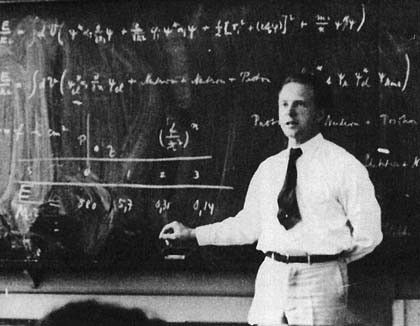
Heisenberg
Yesterday I wrote how as many as one in twenty observational medical studies could be "right" - the rest wrong.

So today I was perusing the following Wired article.

Jogging makes you live longer is the point of it.  The article covers a mortality study that looked at the deaths of joggers and non-joggers over several decades from 1976 through 2003.

The bottom line is that, according to the study, if you jog (man or woman) you might expect to live an extra six or so years.

So let's think about this: how could a study determine such a thing?

Now, let's take a simpler "study" and see how that might work.

Say I want to have a pumpkin contest and see which farmer grows the largest pumpkin.  So on June first I hand out free pumpkin seeds to anyone who wants to be in the contest.  Then I post a sign that September for my contest and people bring me their pumpkins to weigh in on October 15. 

The first year Mr. Jones is the winner.

Every year thereafter for a few years I have the same contest and Jones is often the winner.

But then Smith appears one year and his pumpkins are even larger - by 5% or so on average.

So Smith starts to win.

While I can make a lot of observations about what I have just described the problem what facts do these observations really convey?

Smith apparently has found a way to grow pumpkins larger than Jones.  But since I have no visibility into the processes used by either Smith or Jones I really cannot say anything concrete.

For all I know Smith may be doing something Jones is not (like planting his pumpkins earlier from old seed stock).

Similarly with studies like the jogger study.

We don't know what else these joggers are doing so how do we create a causal link between jogging and longer life?

Almost by definition joggers are "more conscious" of their health than non-joggers so maybe there are other activities (good eating, vitamins, etc.) involved.

But since no study can really probe that deeply and reliably into someone's life over such a long period can we really say anything for sure?

Epidemiology talks about risk.  Risk being the notion that something bad will happen, e.g., a heart attack, if you cholesterol is too high.

But clearly there must be some sort of "inverse" to that: supposing that your cholesterol is low then does something good happen? 

In the light of the fact this study was done, according to the article, in Denmark, we can call it ksir.

And what about jogging?  Is it associated with ksir?

What about good eating?

What about low stress?

But its interesting how you never see anything like ksir being discussed: only risk.  Yet one would imagine that the sword cuts both ways - somethings might be bad - others good - and both with measurable outcomes.

I suppose if ksir was real than people would discover it and live measurably longer than others - but as far as I can they don't.

Certainly jogging alone does not necessarily eliminate the risk of, say heart disease.  Just ask Jim Fixx.  While he is credited with starting the boom in jogging in 1977 with his "The Complete Running Book" he died jogging on the road of a heart attack.

One might think that risk and ksir are like the two sides of a balance - I can do things "good" for me and things "bad" for me.  But that's not how it works.  A balance has no notion of time, for example.  So I might do something bad for a while and then something good for a long time - but the damage caused during the "bad phase" may not be repairable.

Balances only measure the weight of things at a given moment - no balance I know of can look back over time for a comparison.

Perhapst risk and ksir are conserved like momentum or energy?

Humans have not found a way to make effective relative comparisons over time: is it better to have smoked, quit smoking and jogged as compared to having never smoked or jogged?

No one knows...

I think that the bottom line here is that most of this "medical data" is basically just "anecdotal."  Joggers, all things being equal, might live longer, smokers live less long. 

But certainly this differs quite a bit from individual results. 

Some very old people smoke and never get cancer. 

Some joggers, like Fixx, die young.

To a large degree this is like quantum physics: large collections of particles, atoms, molecules and so on behave in ways we see as predictable at the level of our perception: a cue ball rolling along a billiard table. 

But individual particles, like an electron in the cue ball, are completely unpredictable individually.

Similarly large collections of people have statistically predictable behaviors: one cannot predict the mileage of any one individual for any one particular activity such as jogging or smoking.

Perhaps humanity is not designed to operate for the individual - just as a cue ball is not governed by the unpredictability of the individual electrons inside it.  Instead I imagine that humanity is design more to be like the cue ball - rolling in some direction regardless of the behavior of the individual elements inside it.

But I think science misses this looking at something that, as Heisenberg says, is uncertain: the action of an individual particle (or human) which we cannot know.

Only statistically can we know things at the quantum level and I suspect the same is true for humanity at large and its "health."

The real question I think is this: is it possible to make substantial changes to the direction of the cue ball by individual actions or is our individuality quantum based in some way so that by definition humanity will always remain unpredictable?

I do not think humanity knows the answer to this and until it does we are mostly going to be jousting with windmills.

Thursday, May 3, 2012

US Scientific Medical Studies: a 1 in 20 Accuracy Rate?

Lest you think my thoughts on modern "science" are simply hogwash I offer this article: "Analytical Trend Trouble Scientists."

I am not the only one that thinks making random observations and calling the result science troubling.

At issue in the article are "observational studies."  These are studies where science does analysis of "published data."  Most likely data published for some other study and most likely data to which we have only the reported "results" and not the actual underlying data collected.

The real question boils down to this: if I give two scientific teams the same data, in the case of the article U.K. cancer cases versus the use of a drug, should I expect the same answers with regard to whether or not the drug creates a significant increase in cancer.

You might think that there are only two answers here: yes or no.

But there are in fact more.  For one thing it may be that the data shows no meaningful association between the drug's use and cancer.  This could be for any number of reasons: not enough data, not enough statistical significance, i.e., a result not really different than "noise" in the data, bad data, and so on.

So legitimate scientific results include "bad data", "no statistically significant results", and so on.

What the article shows us is this:

1) Given the same sets of data two groups of scientists produce opposing results: drug causes cancer, drug does not cause cancer.

2) The "difference" between the two is "methodology."  This means how did I look at the data.

3) Correlating this with other posts and in particular the ones where I discuss things like "Falsified Medical Studies the Norm" you have to also believe that sheer incompetence may also be involved.

Now the problem is what do people use these studies for?

Well, for one thing, to make policy regarding drugs: is this drug good for the baby or not?  will this drug give grandma cancer? and on and on...

And this is not just for drugs.  These types of studies are now used for climate change, nutrition, psychology and environmental science.

In the decade 1990 - 2000 some 80,000 "observational studies" were conducted.  In the decade 2000 - 2010 that number increased threefold according to the article to 263,000.

A number of people analyzing and monitoring this published research point out that at best 1 in 5 of these studies produces results that someone else can replicate.  At worst, 1 in 20.

So each year our science effort here in the use produces some 26,000 research reports of which at most 5,200 are actually accurate.  Worse, it may be only as many 1,300 that contain valid science.

So what does this say about US as a country?

What does this say about our educational system?

It says that, particularly in the area of public medical policy where these kinds of studies are common, we are flying totally blind with perhaps 5% of the information our finest scientific minds actually being correct.

Imagine if your steering wheel on your car worked correctly with the same rate of reliability (or let's be more generous and say 20% of the time).

Would you drive?

What if your child's vaccinations had this level of reliability, viability or safety?

Would you vaccinate your child?

The problem here is that this is what I will call "public policy science."  "Science" where the outcome is basically predetermined by malice, incompetence or bias so that a point can be made: yes the earth is dying because of man: see our study proves it.

The problem is is that no one bothers these days to attempt to reproduce these kinds of results.

Yet the results make there way into the news, your cell phone, etc. and they become like urban legends.

Everyone knows X is happening where its global climate change or cholesterol in your arteries.

So therefore it MUST be true.

Even if its not.

A big part of this is that medicine (not the hard science kind, e.g., biochemistry, etc.) is like sociology and environmental science and many more.  Its not a "cause and effect" or "law" based process.

In chemistry either the chemical reactions occur or they don't, either the result is electrically conductive or its not, and so on.  Similarly for physics.

In these hard sciences people often build on the work of others so that if a result does not work or cannot be reproduced its quickly found out.

This is not true in the "social science" world.

If I write a paper showing that "more children are starving" or "more children are dying of cancer" because of X then public funds flow toward "fixing" that end.  Fixing involves more study, study of the fixes, studies of the studies of the fixes (as described in the WSJ article).  TV ads appear with starving children.  Everyone "knows" the children are starving and so more money pours in.

This is not science.

Its the wolf (in the form of lies due to deviousness or incompetence) preying on the stupid.

Yet because it is called "science" people don't question it - mostly because they A) agree with the result and B) are fearful of any repercussion of a disagreement.

These types of studies abound in the US Medicare system - and look what its doing to our budget.

But until people wake up and see what's going on it will not stop.

Wednesday, May 2, 2012

Human Genetics - Barking up the Wrong Tree

BRCA2 - Wikipedia
Yesterday I wrote about how bacteria are symbiotic with the human body.  I also described how complex this system was including not only the trillions of bacteria but also the systems the bacteria used for communication.

Today I came across this article at the WSJ.  It describes how human genetic mapping has "identified" 4,000 diseases with a "known genetic basis."

The article links, for example, various gene sequences such as BRCA2 to various risks of disease, e.g., breast, prostate, and pancreatic cancer.

Now, to be sure, genetic disruptions and mutations can directly cause a variety of human problems as well as death.

But this article is not talking about direct, causal linkages.  Instead it talks about risk.

I talked about medical risk in "Cholesterol, Heart Disease and Magical Thinking."

So here I'd like to take a somewhat different approach to this idea of genes and medical risk.

Like medicine computer science can involve the study of complex systems, albeit on a much smaller scale.

For example, there are many very large software systems in the world.  Some with tens or hundreds of millions of lines of code (source here, m = millions of lines):

    Lucent 5ESS Switch        100m   
    Windows Vista              50m  
    Red Hat Linux 7.1          30m 
    Windows XP                 40m    
    Visual Studio              40m  
    MS Office                  30m 

Now these are just estimates but the orders of magnitude are whats important.

We can think of the "source code" here as the DNA of the software system.  During the execution of the program there are various pieces of information stored in the computers memory and on the file system - these are the "expression" of the software which is kind of like the genes expressing things like arms or brains or whatever.  Input from the environment, such as users created Word documents, is like the input your body receives from the outside world.

Now this is a very crude analogy but an important one, I think, when one looks are the issue of complexity.

Humans are hugely more complex because of a few basic factors:

1) Genes express proteins and the assembly of proteins - software typically does not express constructs used to build other constructs in the same way.  There are some similarities, for example software to construct abstract notions, e.g., a linked list, and then other code that uses the linked list.  But its not quite the same.

2) Software systems (at least those described above) are not self assembling.  Humans assemble them directly.

3) Humans are four-dimensional physical constructs described by DNA and DNA is more like a blueprint for a machine rather than a machine in and of itself. Software applications, on the other hand, are effectively two dimensional and less machine-like.  (Taking out "time" software can be though of as storage (one dimension) and program (another dimension).  Human's are three dimensional objects described by a one dimensional linear DNA sequence.)

Now at a code level human DNA is about 4- billion of GTAC sequences.

So though DNA itself is not much more complex than a very large software application because its effectively a blueprint for a self-replicating machine as opposed to mathematical description of algorithms I will argue that DNA is at least five orders of magnitude more "information dense" than software - as well as physically "information dense" in the sense that one human cell is tiny compared to a thumb drive that could store 100m lines of code (again by orders of magnitude).

So that's about ten or fifteen times more basic "code" than the largest software applications.

Basically an order of magnitude but not two.

So what do we, as humans, know about fixing or repairing something like the Lucent 5ESS Switch?

Well, for one thing, we don't go about like doctors go about understanding human genetics.

No one goes into the code and randomly makes changes here or there in order to fix a symptom.

So let's imagine an example:  Suppose this system (which is used by the phone companies to switch voice calls over trunk lines - see this) has a problem - say a set of files on disk is not deleted at a certain point in the during the operation of the system.

Now in the medical world of allopathy the "solution" would be to simply go in, like with surgery, and remove the offending files though some manual means.

See - now the files are gone.  But what about what's causing the problem?

While we might search the code base looking for references to where these file are created without the context of how the system operates we would be in the same position as doctors and modern medicine is looking at genes.

For example, I might search for "unlink" commands in the source code (these remove files on 3B2 systems).  Their might be 10,000 or 50,000 occurrences of them - only there may only be one - because a library of code is used elsewhere that calls unlink.

So what can we deduce from the single instance of an unlink (which I argue is like looking at one gene like BRCA2).

Not much.

BRCA2 is about 81 thousand bases long - pdfExpress - Lexigraph's product - is about the four times that size (404 thousand lines of code) - and it uses 206 unlink commands.

So medicine is looking at a large, complex entity that plays a role in many aspects of the human body and comparing it to diseases which have other, non-genetic components, e.g., iodine and breast cancer.

In our 5ESS we cannot just look at the files that are not being deleted - we need to understand why they are not being deleted.  And while we can remove them they are probably going to reappear (like a cancer) until we figure out what's wrong.

So what I am saying here is that medical science is not thinking like systems analysts working on a new, unknown software problem (certainly new hires are brought in to work on the 5ESS software and they must be trained - how it works outwardly, i.e., what it does at the "outer level" corresponding to what a healthy and unhealthy human might look like - and how it works inwardly, i.e., what the pathways inside the working system are, what they do and so on - like your veins, arteries, nerves, bones and so on.

You don't just let the new hires go in and hack away unknowingly at what they do not understand.

Personally I think there is a missing human science in "debugging" and learning about complex systems (I described this in "Through the Keyhole").

Medical science is bogus for several reasons with regard to "understanding" genetics:

1) Even if someone gave me the 100 million lines of 5ESS software code without understanding the context of it use, i.e., the switching and OS hardware that goes with it, what could I really understand?

2) If I don't have the proper environmental context to look at the code, i.e., not only the wires, power, cooling, physical connections, etc., but also how someone configures and sets it up - what happens while its running, and so on I could never hope to understand it let alone fix it.

So these basic problem, much less the fact that DNA is many orders of magnitude "more sophisticated" in terms of size and information density make the attempt look even more foolish.

Now let's through in that DNA builds a conscious self replicating machine that can live one hundred years.  Software and programming as a technology has only been around maybe 70 (or maybe 150 years depending on how you count).

So these medical scientists are using basic biology to try an understand a complex, DNA blueprint for a conscious, self-replicating three dimensional physical object.

Worse they think about it at the most basic molecular level.

This is a systems problem.

While we need to understand the basic DNA and biological pieces and parts we also have to have a high-level systems understanding of what these things do.

And that's were the failure is.

BRCA2 is 81 thousand base pairs of highly dense information describing a portion of a self-assembling conscious machine.

Humans don't understand conscious (and this is important because of the placebo effect which shows the mind affects the body) or self-replicating machines (though people are just fooling around now trying to build them).

We also don't fully understand all the physics or molecular biology involved.

I argue these medical scientists also ignore environmental factors like nutrition.

So all this boils down to the fact that we're barking up the wrong tree here.  We need to go "back to school" and understand basic science, biology, physics, and genetics from the ground up first before diving into fixing something like BRCA2.

The real question is this: given the complexity and density of genetic information, and all the rest I describe here - can a human mind really "understand" it all well enough to do anything useful?

(Yes you might say - look at antibiotics or surgery - I argue we're just deleting files that aren't supposed to be there as opposed to understanding anything...)

Tuesday, May 1, 2012

Quorum Sensing - How Bacteria Keep You Alive

Periodically I talk about nutrition-related issues here.

Recently I watched a video by Bonnie Bassler on TED.  Bassler is a microbiologist from Princeton University.

Bassler's area of study is how do bacteria communicate.  In particular her group has discovered that bacteria speak to other bacteria of the same species in a species-orient molecular language and that bacteria speak to other bacteria in a more general molecular oriented language.

You can watch the TED talk but to summarize it works like this.
A particular bacterial species will emit a chemical compound.  At the same time that its emitting the compound its also "listening" for that compound.  The bacteria "listen" until the volume of that compound exceeds a certain threshold at which point the bacteria takes some species-specific action.

This is called "quorum sensing." The molecular "signals" are called "autoinducers."


You can think of this as follows:  You are standing in a large swimming pool with a bottle of red food coloring.  Periodically you put a drop into the pool.

When there's just you the coloring is immediate diluted away and broken down.

But now add more people doing the same thing.  Eventually the pool will start to show a tinge of red.

This is how the bacteria operate according to Bassler.  The live effectively solitary lives dropping their little bits of color into the pool.  Only when they detect a change in the "water" do they act.

So for a bacterial disease that emits a toxin the infection does not start off with a tiny number of bacteria emitting the toxin and that number of bacteria multiplying.  Instead the bacteria multiply without emitting the toxin.  As they multiply they "test" for the appropriate marker (not the toxin) and when there are enough bacteria to trigger a response from the host they all respond at once.

Bassler found some of these signals are specific to a bacterial species and others work across species.

So what does this have to do with nutrition you might ask?

Well, for one thing our digestive tracts contain perhaps 5-10 pounds of bacteria.  No one knows how many species are typical for humans but a safe estimate is around 500 unique species with perhaps 30 to 50 making up the bulk of the bacteria.

These bacteria perform an amazing range of functions from digestion of certain types of food to repressing certain types of infections to supporting immunity to preventing allergies.

Without your symbiotic bacteria in your digestive system (at least) you cannot live.

To me Bassler's work says that not only are these bacteria performing these functions within our bodies but that they are also A) working together - both within and out side of their species and B) if they are emitting chemicals to communicate our bodies are probably receptive to these same "auotinducers" as well.

So my thoughts are:

1) The "gene pool" of all of these bacterial species in our bodies far exceeds the size and complexity of our own human genome.

2) These bacteria are symbiotic with our human bodies (as well as most other living creatures as well I would imagine).

3) All of these bacteria are communicating constantly between themselves and with us.

I think that #3 is the most important and interesting.

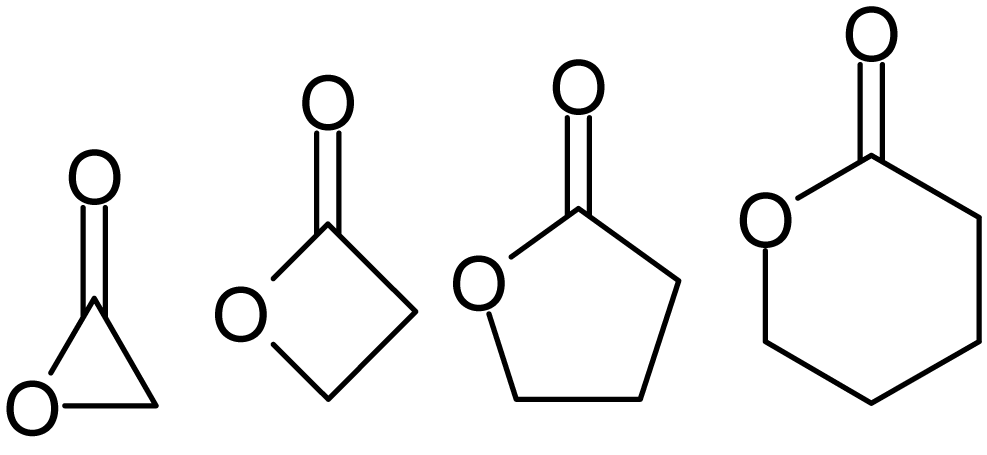
Many bacteria communicate with lactone-based compounds (see Bassler's talk) - in particular γ-butyrolactone (the five-sided version below).  These are cyclic esters related to alcohol and carboxylic acid.  They occur, for example, in oak trees and provide flavor to whiskey.


So clearly they can and do react with our bodies - if we can taste whiskey then we can probably sense lactones.

This all tells me that within our bodies there is a complex interaction between all of these bacteria and our selves.  This interaction is carried on with constant communication via chemical signals.  There are many pounds and literally trillions of cells - both in our bodies and in our bacterial symbiotic partners.

Now let's take a look at what modern medicine does with this information...

Nothing.

Bassler goes so far as to suggest using techniques to disrupt this communication as alternatives for antibiotics.

But what would that mean?

Well human brain's contain maybe 100 billion neurons.  But our bodies and their corresponding bacteria contain ten or hundred times more cells.

Its seems hard to imagine that simply stomping all over the basic communication in a system this complex is really going to provide anything beneficial in the long run.

These number suggest that our bodies and their symbiotic partners the bacteria make up a complex, communicating system at least as complicated as a brain.

In fact, I think its very likely that via your body your brain has an indirect sense of what's going on at some level with a lot of this symbiotic activity - how can it not when you think about it?

So modern medicine's approach to all this is today to kill off bacteria indiscriminately with antibiotics.  (I have covered this in detail in other posts such as "Antibiotics = Childhood Asthma").

What do you suppose this does to the over all digestive health of the organism?

After some consideration I think this is like treating mental illness by drilling hole through someone's brain.

While a treatment like this may cause some positive outcomes for treating certain symptoms I cannot see their long term benefit.

No, I think that modern medical science (at least the part that's related to "treating" human disease) has missed the mark by a wide margin.

If you consider the overall complexity and what our treatments like antibiotics do we're basically in the stone age treating mental illness with trepination (drilling holes in the head).

Science needs to move forward and find a way to deal with and understand large complex systems - whether a brain or a human body.

Without this we are all going to suffer from treatments that are ultimately worse than the disease.

When you think about all the "digestive-related" problems (from obesity to asthma to bowel problems) that people in the US suffer I think that a huge percentage of them can be tied to either A) bad nutrition or B) bad treatments.

You have to ask what do all the chemicals, hormones, genetically modified cells, artificial oils and all the rest do to this communication system?

What happens when you indiscriminately kill off a whole section of bacteria that serve some useful purpose in the human body?

What happens when you prevent children from building up a properly configured symbiotic bacterial system in their bodies by using too much "hand sanitizer" and preventing them from eating dirt?

No one is asking these questions... No one.

Yet we are all victims of this process.

Certainly medical knowledge has dramatically advanced because we can understand that some of these things are going - and I have no argument with that.

The problem is what we do with that knowledge: we create dangerous foods, treatments, and so on that do far more harm than good.

And we foist them all off on an unknowing public.

Monday, April 30, 2012

Constitutional Protected Speech - Facebook "Like" Doesn't Cut It...

A sheriff, Adams, ran for reelection.  Two of his employees, while Adams was still sheriff, "liked" him on his Facebook page.  Later, Roberts, who ran against Adams won.  The two employees were dismissed.  (Full case ruling here.)

The employees sue claiming that Roberts fired them for exercising their right to "free speech" under the Constitution.

The court finds that Facebook "Like" is not free speech.

So is this right?

Is a Facebook "like" equal to a black arm band (Tinker) or burning a flag (Texas v. Johnson)?

In the wired world there's a lot of concern over this.

How can something so ubiquitous as "Like" not be speech?

The court's reasoning was pretty clear:

First of all at issue was only the action of clicking the "Like" button.  Neither plaintiff could show that they actually made statements on the page.

As compared to Tinker where black armbands were worn in protest this is markedly different.  People actually wore the arm bands in a public place.  They physically showed up where others could see them.  And, in the case of Tinker, this was considered "speech."

In this case the plaintiff's couldn't show that they had made any speech - there was no record of any Facebook posts - only the fact that they had clicked the "Like" button.

The court felt that "free speech" had to have substantive content and "will not attempt to infer the actual content of Carter's [plaintiff] posts from one click of a button on Adam's page."

Now I think this is interesting.  Here the court is likening (no pun intended) "Like" to something without substance.  I think a comparable act in the physical world might be a "thumbs up" to fellow students wearing black arm bands.

The physical act of raising your thumb could mean support - and it could mean "get the hell out of my school."

But without additional information (which in the case the plaintiff's failed to provided, i.e., actual Facebook posts) what is the court to do?

Do I really "Like" everything on Facebook I click "Like" for?  Perhaps I am trying to impress a member of the opposite sex so I like what he or she likes to "get noticed."

The court is saying that without more information "Like" means nothing.

It might be like making a quiet statement in a large crowd.  Perhaps I can prove I made a statement but if no one hears it does it deserve Constitutional protection.

Secondly courts don't place as much substance on "Facebook Friends" for good reason.

In Quigley Corp. v. Karkus, 2009 U.S. Dist. Lexis 41296 (May 15, 2009) (see this) involving an issue revolving around whether a corporate board member had fully disclosed relationships the court found that failing to include a specific "Facebook Friend" was not a substantive item.

Why?

Because either party can "end" the friendship by merely deleting it through Facebook.

So if the "friendship" is that fleeting is it real?

I think the court rightly says that without other evidence of involvement between the parties no.

And to be clear let's contrast this with explicit Facebook behavior.  In this link the Philadelphia Bar describes how its unethical for a lawyer to use "Facebook" friends via a third party to infiltrate someone's Facebook friends.

Why is this legally different than a "Like?"

Because someone is actively engaging in a subterfuge in which Facebook is used as a tool to extract or gain information that would otherwise not be possible to gather, i.e., Facebook is a communication medium - like a phone.

I can call you on the phone and pretend to be a new neighbor and pump you for information - I can do the same on Facebook - the details of the medium don't matter because the act of subterfuge is the same in either case.

The bottom line, sadly I think for those in love with the digital social world, is that "Like" is not equal to true speech.

While "like" might have value for mining social data about you I don't agree its necessarily protected free speech.  I think that there must be something else involved (personal communications, other meaningful dialogue in some other documented medium such as email).  Only in the context of this does "Like" have meaning.

So what about a "Like" causing you to get hired (or not) as I wrote about in "Can Your 'Social Presence' Get You Hired?"

I think its a bit of a different question.

Outside of a legal context like is more "Like" a choice of a car or clothing.

If you're going down to Social Services to sign up for welfare or you're going to pull out your "Access" card at Walmart its best not to drive down in your Cadillac SUV or Lamborghini.  While you certainly can do that the act of choosing that particular vehicle says something about you none-the-less speaks about you.

Similarly you might not want to apply for that job chaperoning teen dances with "I Like'm Young" tattooed on your forearm.

Clearly you're choice to say or show how you feel but their might be consequence...